
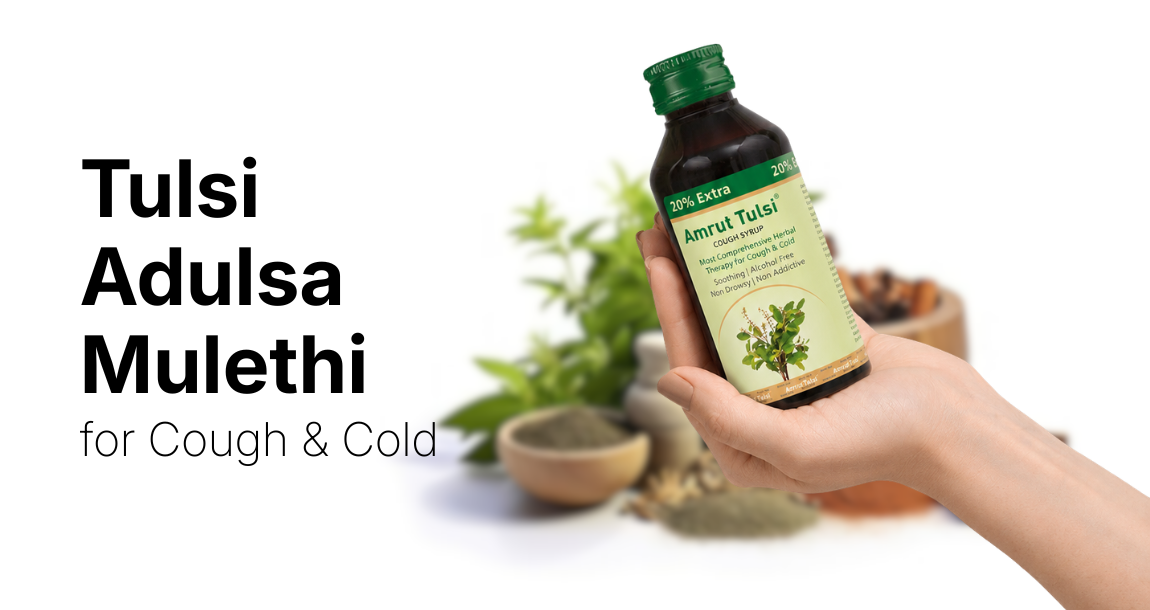
In many Indian homes, a cough or sore throat still brings out familiar kitchen and herbal remedies before anything else. Tulsi leaves in warm water, mulethi for the throat, or an Ayurvedic cough preparation containing adulsa are all part of a tradition that has been passed down for generations.
These herbs are well known in Ayurveda, but it helps to separate traditional use from modern medical proof. “Natural” does not automatically mean proven for every type of cough, and it does not mean a herb is suitable for everyone.
So what are Tulsi, Adulsa and Mulethi traditionally used for, and how should we think about them today?
Tulsi: More Than a Household Plant
Tulsi, or holy basil, has a long place in Ayurveda and Indian household wellness practices.
Traditionally, it has been used in preparations for seasonal respiratory discomfort, throat irritation and general wellbeing. It is often taken as a warm infusion, included in herbal blends or used in cough formulations.
Modern research has also explored Tulsi for antioxidant, anti-inflammatory and antimicrobial properties. That research is interesting, but it should not be stretched into claims that Tulsi can “cure” every cough, cold or respiratory infection.
A cough can have many causes, from a simple viral infection to allergy, asthma, reflux or something more serious. No single herb should be expected to cover all of them.
Adulsa: Traditionally Linked With Respiratory Care
Adulsa, also known as Vasaka, is another herb strongly associated with respiratory formulations in Ayurveda.
It has traditionally been used when cough is accompanied by mucus or chest congestion. This is one reason it appears in many classical and modern herbal cough preparations.
Researchers have studied naturally occurring compounds in the plant, including vasicine, for possible respiratory effects. However, as with many traditional herbs, the quality and strength of clinical evidence can vary depending on the preparation and the condition being studied.
That makes the formulation important. A finished Ayurvedic product is not the same thing as taking an isolated herb at home in an unknown quantity.
Mulethi: Soothing, Familiar — but Not Unlimited
Mulethi, or licorice root, is probably best known for its naturally sweet taste and its traditional use for throat discomfort.
It is commonly included in herbal preparations intended to soothe the throat and support respiratory comfort.
But Mulethi is also a good example of why herbal products should be used thoughtfully. Licorice contains active compounds, and excessive or prolonged intake can cause problems in some people, including effects on blood pressure and fluid balance.
People with high blood pressure, heart or kidney conditions, pregnant women and anyone taking regular medication should be particularly careful about using concentrated licorice products without professional advice.
Why Are These Herbs Often Used Together?
Ayurvedic formulations commonly combine herbs rather than relying on one ingredient in isolation.
A cough may involve throat irritation, mucus, nasal symptoms and seasonal triggers at the same time. Combining herbs is traditionally intended to address the broader symptom pattern.
Ikon Remedies brings this approach into its Amrut Tulsi range, which includes different Tulsi-based formats for different preferences and uses.
The important part is to choose an appropriate product and follow its directions rather than assuming that taking more herbs will produce faster relief.
When Home or Herbal Care Is Not Enough
For a mild, short-lived cough or throat irritation, supportive care may be all that is needed. Rest, fluids and avoiding smoke or other irritants can help while the body recovers.
But a persistent cough should not be repeatedly treated at home without understanding the cause.
See a healthcare professional if the cough lasts for several weeks, keeps returning, causes significant night-time disturbance or is accompanied by wheezing.
Seek medical attention sooner for difficulty breathing, chest pain, high or persistent fever, coughing up blood, severe weakness or symptoms that are clearly getting worse.
Ayurveda Works Best When It Is Used Responsibly
Tulsi, Adulsa and Mulethi have earned their place in traditional Indian respiratory care over many generations. That history is worth respecting.
At the same time, responsible Ayurvedic wellness does not require exaggerated promises. Traditional use, modern research and individual medical needs can all be considered together.
Herbal products can be useful as part of supportive care when they are appropriate for the person and the symptoms. They should not delay medical attention when warning signs are present, and they should be used with the same care you would give any health product.
That balanced approach keeps the tradition practical, relevant and safe.