
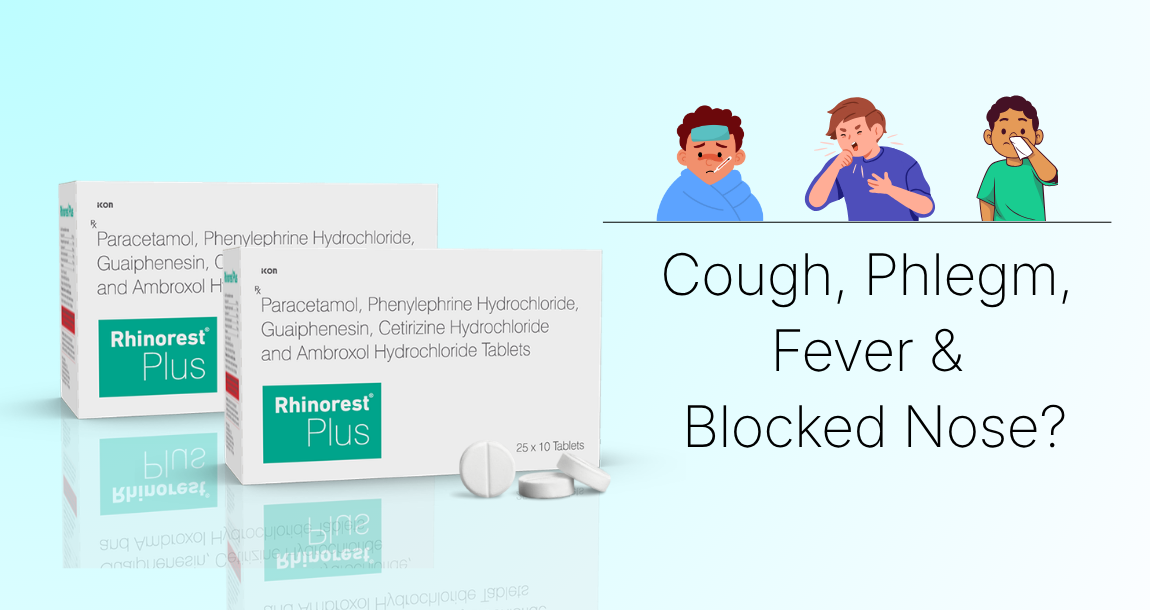
Some colds seem to arrive one symptom at a time. Others hit all at once: a blocked nose, cough, thick phlegm, headache, fever, body ache and the feeling that you cannot breathe comfortably through your nose.
When several symptoms show up together, the obvious reaction is to reach for several different medicines. One for fever, another for congestion, something for the cough and maybe another product for the mucus.
That can make treatment more complicated than it needs to be — and it can also increase the chance of taking the same active ingredient twice.
Why Do So Many Cold Symptoms Appear Together?
A respiratory infection can affect more than one part of the upper and lower airways.
The nose may become blocked because the tissues inside it swell. The body may produce more mucus, which can make the nose run or create phlegm that needs to be coughed out. The throat may become irritated, while the immune response can bring fever, headache and body ache.
These symptoms are connected, which is why they often travel together.
The exact combination is different for everyone. One person may mainly have congestion and sneezing, while another has a much more productive cough and fever.
That difference matters when choosing symptom relief.
Start by Deciding Which Symptoms Actually Need Treatment
A multi-symptom product makes the most sense when you genuinely have several of the symptoms it is designed to address.
If you only have a blocked nose, for example, there may be no reason to take a product that also contains ingredients for fever, mucus and allergy symptoms.
The same applies in reverse. If your main problem is thick phlegm, the treatment approach is different from a completely dry cough.
This is why reading the label is worth the extra minute. It tells you what the medicine contains, what it is intended for and how it should be taken.
Be Careful With Duplicate Ingredients
This is one of the easiest mistakes to make during a bad cold.
You take a combination cold tablet, then later take a separate medicine for headache or fever without realising the two products contain the same pain-relief ingredient.
Or you combine two cold medicines that both contain an antihistamine or decongestant.
More medicine is not automatically better relief.
Before combining products, check the active ingredients on both labels. If you are unsure, ask a pharmacist or doctor rather than guessing.
For adults dealing with several cold symptoms together, Rhinorest Plus Tablets is one of the multi-symptom options available from Ikon Remedies. It should be used only according to the approved product information and professional advice.
What Else Helps When You Feel Completely Congested?
Medicine is only one part of recovery.
Drink enough fluids, especially if you have fever or are losing appetite. Hydration can also help stop respiratory secretions from becoming overly thick.
Rest as much as your body needs. Avoid smoking and second-hand smoke, which can make coughing and airway irritation worse. Saline nasal sprays may help with congestion, and warm fluids can be soothing when the throat feels raw from repeated coughing.
If you are bringing up phlegm, do not assume that every productive cough needs to be completely suppressed. Coughing is one of the ways the body clears mucus from the airways.
When Is It More Than a Routine Cold?
A cluster of cold symptoms can still be caused by flu, COVID-19 or another respiratory infection. Pneumonia and other conditions can also begin with cough and fever.
Seek medical help if you have difficulty breathing, chest pain, persistent high fever, confusion, severe weakness, bluish lips, repeated vomiting or signs of dehydration.
Coughing up blood, significant wheezing or symptoms that improve and then return much more strongly also deserve medical attention.
People with asthma, COPD, heart disease or a weakened immune system should be especially careful about worsening respiratory symptoms.
One Product Should Not Replace Good Judgement
Multi-symptom cold medicines are convenient because they can address several complaints in a single dose, but convenience works best when the product actually matches your symptoms.
Think about what is bothering you most, read the active ingredients and avoid doubling up on medicines.
Most uncomplicated respiratory infections improve with time, rest, fluids and sensible symptom relief. If the illness feels unusually severe or is moving in the wrong direction, it is better to get checked than to keep adding more medicines.